The UAB takes an in-depth look at the state of classical music in Catalonia
The Research Group in Scenic and Musical Arts in Modern Societies (GRAEMUSC) and the Catalan Association of Classical Music Performers (ACIMC) presented their 2024 report on the state of classical music, entitled "La música clàssica a Catalunya. Informe de l'any 2024", on 19 February at the association's headquarters. The study, the first one ever to be conducted by a UAB research team, provides a very precise picture of this cultural environment, with a larger amount of relatable data.
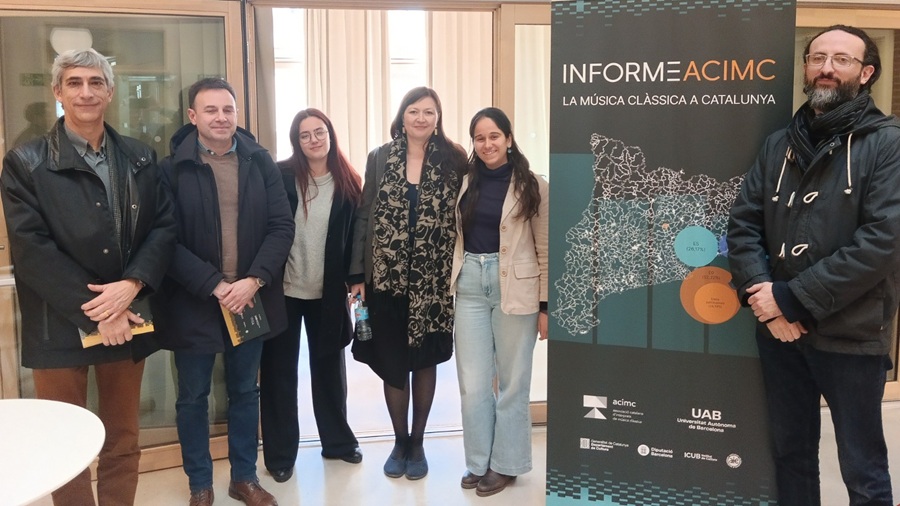
The main goal of the ACIMC report is to gather and analyse each year strategic information on the situation of classical music in Catalonia, including regional and gender-specific perspectives. The study was first conducted in 2021, but now it has been carried out for the first time by a working group of the UAB Department of Art and Musicology, coordinated by Gabrielle Kaufman and Francesc Cortès, and with the collaboration of Anna Fusté, Sílvia Torres, Carles Badal and Àngel Monasterio, all of them graduates in Musicology of the UAB.
The 2024 report represents a very important quantitative and qualitative leap forward. Researchers utilised relational tools and statistical methodologies alongside musicological bases. Based on responses from hundreds of music professionals, it covered concerts held throughout Catalonia, providing exhaustive data on municipalities, venues, programmers, performers, composers, book and discography publishing, and funding.
“The result is one of the most comprehensive reports, covering the greatest number of aspects, on classical music concerts in Catalonia”, says Francesc Cortès, professor and musicologist at the UAB. “The subsequent analysis of this data will allow us to identify current needs, highlight possible inequalities, and contribute to collaborations between public institutions and music-sector workers.”
The presentation of the report took place on 19 February at the headquarters of ACIMC and was done by Lluís Rodríguez Salvà, president of the association, and members of the research team.