
Sarcopenia in patients with liver cirrhosis. New strategies to facilitate their assessment.
Sarcopenia is a frequent complication in liver cirrhosis and has a direct impact on the quality of life and prognosis of patients. Although it has traditionally been measured using computed tomography, this technique has limitations. A study conducted in collaboration with the UAB and Vall d'Hebron Hospital Universitari explores new evaluation strategies that are more accessible and radiation-free, aiming to facilitate the detection and monitoring of sarcopenia in clinical practice.
Sarcopenia is a progressive and widespread alteration of skeletal muscle with loss of muscle mass and strength accompanied by reduced physical function. It is present in elderly people and patients with chronic diseases, including liver cirrhosis. Most studies have investigated sarcopenia using only muscle mass measurements. Therefore, from an operational point of view, sarcopenia is identified with observable features of loss of muscle mass without evaluating strength or physical function.
Sarcopenia in cirrhosis affects 30-70% of patients. In cirrhotics, sarcopenia should be evaluated, since it is a predictor of reduced quality of life, infections, longer duration of admissions and mortality (pre- and post-transplant). It is also correlated with the presence of hepatic encephalopathy, a serious neurological complication. Therefore, it is important to investigate how nutrition and therapeutic measures can affect the reversibility of sarcopenia and the improvement of complications.
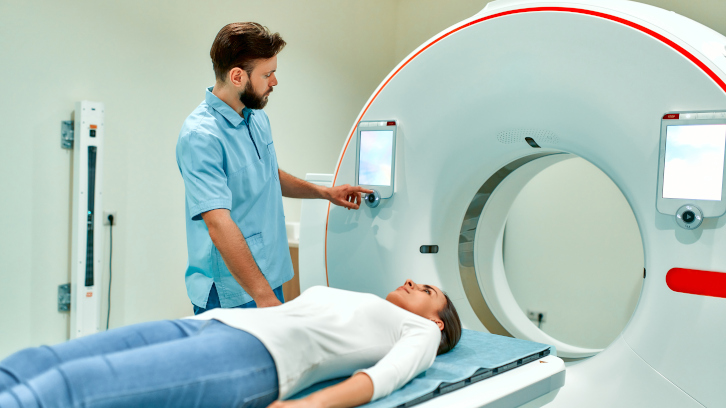
The reference measure for sarcopenia in cirrhosis is the Skeletal Muscle Index (SMI) which is derived from the measurement of the area of several muscles at the level of the third lumbar vertebra, using computed tomography (CT).
The use of CT is limited by radiation exposure, cost, and accessibility, being problematic for patients who need multiple assessments or must be performed at bedside. Therefore, we are evaluating other more accessible techniques, which alone or in combination could be a valid alternative to CT. These techniques include ultrasound (US) at the level of various muscles, bioimpedance analysis and anthropometric measurements. They can be carried out with portable procedures and are easily repeatable.
In the study we published, we evaluated in a broad cohort of 250 patients with cirrhosis the usefulness of these easy-to-use, radiation-free measures for identifying sarcopenia. Ultrasonography of psoas and thigh, bioimpedance and anthropometric measurements were assessed and compared to SMI measured by CT (figure). We found that both psoas and thigh ultrasound and bioimpedance have a moderate-strong correlation with SMI. But more importantly, using a multimodal approach (combining measurements) we can improve accuracy. This is achieved by models that combine ultrasound measurements (psoas or thigh) with anthropometric measurements (body mass index and calf circumference); or bioimpedance with anthropometric.
Representation of a portable ultrasonography on the thigh.
These results allow us to conclude that we have alternatives to CT that are accurate, safe and accessible for the study of sarcopenia. This will allow us to improve the monitoring of sarcopenia and the assessment of its treatment; sarcopenia assessment in the care of cirrhotic patients will be more accessible.
Prof. Víctor Vargas
Emeritus Professor of Medicine, Medical School, Unitat Docent Vall d'Hebron, Universitat Autònoma de Barcelona.
Victor.Vargas@uab.cat
Dra. Isabel Campos Varela
Liver Unit, Digestive Diseases Area, Hospital Universitari Vall d'Hebron, Vall d’Hebron Institut de Recerca, Vall d'Hebron Barcelona Hospital Campus, Universitat Autònoma de Barcelona.
Biomedical Research Centre in the Network of Liver and Digestive Diseases, Instituto de Salud Carlos III, Madrid, Spain.
References
Campos-Varela I, Cespedes C, Palacio E, Quiroga S, Roson N, Dodge JL, Vargas-Accarino E, Rodríguez-Martinez A, Dopazo C, Cardenas G, Simon-Talero M, Vargas V, Castells L. Assessment of sarcopenia in cirrhosis: A practical approach using thigh and psoas ultrasound, bioimpedance, and anthropometry. Liver Transpl. 2026 Jun 1;32(6):873-889. doi: 10.1097/LVT.0000000000000776. Epub 2025 Dec 1.PMID: 41408875