Maria Dolors Márquez Cebrián: ¿We must commit to active and transformative methodologies¿
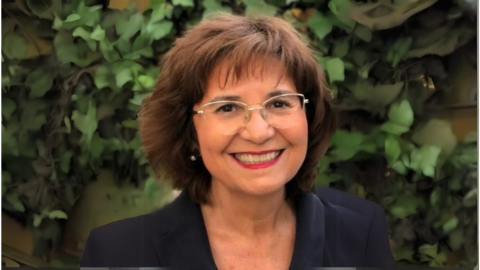
Professor Maria Dolors Márquez, from the Department of Economics and Economic History at the UAB, has been awarded the 7th Teaching Excellence Prize of the Autonomous University of Barcelona. With a 35-year career devoted to teaching and educational innovation, she receives this distinction as a collective gesture that acknowledges the work of lecturers and the entire Faculty of Economics and Business.
05/07/2025
What does this recognition mean to you?
When we do our job as teachers, we never think about receiving an award like this. Our true reward is seeing that students understand the concepts, feel motivated in class and often find our courses genuinely useful. Even so, it is important that the university highlights teaching work and the innovation we promote. I understand this recognition as an added value to a professional career focused on teaching, and also as a shared acknowledgment with all the colleagues I have worked with over the years.
What does teaching bring to your daily life?
Teaching fulfills me deeply. I see it as a creative activity and a constant connection with young people. Every class, every activity is a challenge in thinking how to best convey content and how to engage students. Supervising Final Degree Projects is also extremely rewarding: seeing students gain confidence and maturity is a great reward.
How has teaching and learning changed over these years?
When I started in 1990, the classroom was the only place to access knowledge. There was no virtual campus or digital access to materials. Now students have a wide range of resources at their disposal, and this forces us to reconsider what we do in the classroom. The challenge is to turn it into an active space for discussion, debate and collective knowledge-building. This is why we must commit to active and transformative methodologies. And the institution must also support this structural change, beyond individual initiatives.
What have you learned from being part of the Faculty’s leadership team?
I was Vice-Dean for Quality and Teaching Innovation for six years, and this allowed me to gain a broad understanding of how the Faculty works. Everything that happens before reaching the classroom (enrolment, room allocation, academic management, etc.) is fundamental. These often invisible tasks have a direct impact on teaching. Knowing them has helped me appreciate even more the collective and cross-disciplinary work that sustains university life.
How do you see the future of university teaching?
We must adapt to a constantly changing reality. The mass access to information and the emergence of new technologies, such as artificial intelligence, pose the challenge of educating critical thinkers. Our role must be to guide, orient, help understand and compare. Beyond transmitting knowledge, we must foster the ability to analyse, interpret and apply.
What advice would you give to a student just starting at the Faculty?
To value the opportunity of being at university, to immerse themselves in everything it offers: the classes, yes, but also activities, friendships, debates, and the mentors they will meet. They should not see university as a mere formality, but as a stage for learning, sharing and growing personally and professionally.
And to a new lecturer?
To prepare thoroughly, both the content and the planning of each session. Knowing a lot about a subject is not enough: you need to know how to communicate, connect with students, listen, adapt. And also to share doubts and ideas with more experienced colleagues. And above all, to enjoy teaching. When you speak with passion, the classroom feels it.