
Fishing and fish consumption in visigothic times in Aiguafreda de Dalt (Osona, Barcelona)
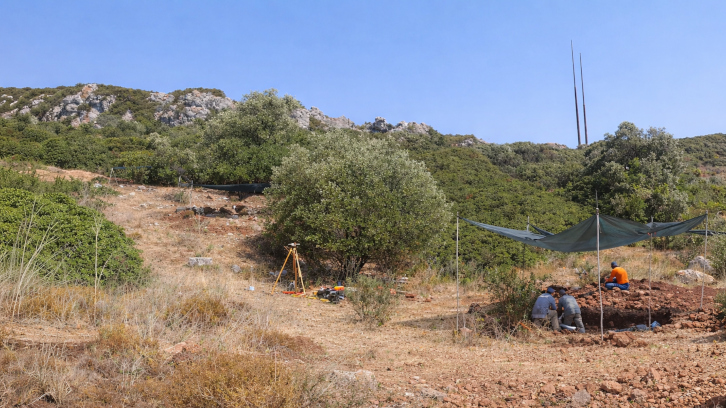
Archaeological research with participation of the UAB has analyzed the Late antiquity site of Aiguafreda de Dalt (Osona, Barcelona) to investigate the fish consumption and the fishing practices in Catalunya in the 7th century. In this ensemble it has been found rests of several species of fish, a fact that would demonstrate a varied consumption in everyday life, even inland, of both coastal and fluvial species.
Following the disintegration of the Roman Empire, the Mediterranean world underwent a profound political, social, and cultural reconfiguration. Within this framework of transformation, our knowledge of fishing practices on the Iberian Peninsula between the 5th and 10th centuries remains limited, particularly in comparison with other regions such as Italy. This lack of information is especially pronounced in the northeastern sector of the peninsula.
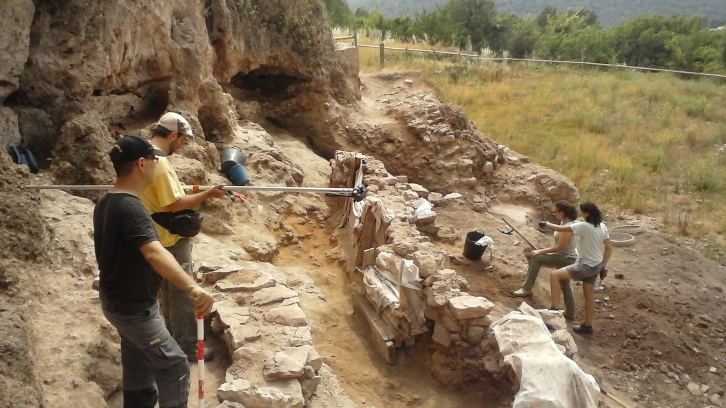
As part of the project for the rehabilitation and functional redefinition of the monumental complex of Aiguafreda de Dalt (Osona), an archaeological site linked to an ecclesiastical settlement—documented in written sources in the late 9th century—was identified and partially excavated. Material evidence, however, indicates that the settlement was already active by the late 6th and early 7th centuries. During the archaeological intervention, a domestic refuse dump dated to the 7th century (580–650 CE) was uncovered. Among the recovered materials, an ichthyoarchaeological assemblage —with fish rests— stands out; it has been analysed in order to reconstruct fishing practices and fish consumption patterns at the site and during the period in question. Aiguafreda de Dalt is, in this regard, the only inland Late Antique site in the region with documented fish remains, underscoring its scientific significance.
Monumental ensemble of Aiguafreda de Dalt.
Analysis of the assemblage indicates a predominantly coastal fishing regime, with a very limited presence of pelagic species. Freshwater fish are also documented, most likely obtained from the nearby Congost River, although their origin in the Ter River, or even in purpose-built artificial ponds, cannot be ruled out. Although the assemblage is dominated by Sparus pagrus and Pagellus erythrinus, a notable diversity of “secondary” species is present, reflecting patterns of ordinary, day-to-day consumption.
In sum, the study sheds light on the provisioning strategies and fish consumption habits of a small inland ecclesiastical community located on the foothills of the Montseny range. This is particularly significant given that, according to evidence from other sites, fish was progressively disappearing from everyday diets during Late Antiquity.
This work represents one of the first detailed studies on fishing in Late Antique Catalonia. The results highlight the influence of cultural and economic factors on the organization of fishing activities and suggest that the early medieval ecclesiastical hierarchy played an important role in structuring both fishing practices and supralocal commercial networks.
Unity of Medieval History
Departament of Sciences of Antiquity and the Middle Ages
Universitat Autònoma de Barcelona
References
Arnau Brosa-Planella, Arnau Garcia-Molsosa, Abel Gallego-Valle, Judit Ciurana Prast, Jaume Oliver-Bruy, Santiago Riera Mora, Maria Saña Seguí, Arturo Morales Muñiz (2025). “Fishing and the Church: Ichthyoarchaeological analyses of the visigothic settlement of Aiguafreda de Dalt site (Catalonia, Spain, 7th c.)”, Journal of Archaeological Science: Reports, Volume 65, 105215. https://doi.org/10.1016/j.jasrep.2025.105215.