Creating a supermaterial to clean water using sunlight
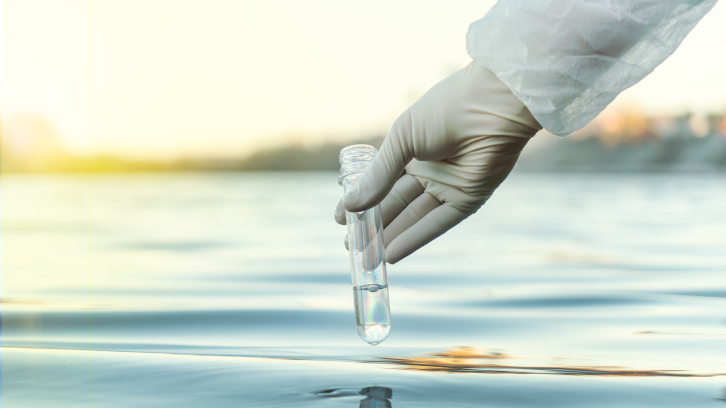
A study involving the UAB presents a new material to purify water using sunlight. The results show that this improved nanomaterial efficiently and stably breaks down contaminants, opening the door to a sustainable solution for drinking water treatment.
One of the major global challenges today is providing clean and safe water. Polluted water from industrial activities, agricultural runoff, and urban areas often contains harmful chemicals, toxins, and microorganisms that can make it unsafe for consumption. Traditional water treatment methods can be expensive, energy-intensive, and sometimes less effective at removing all types of pollutants.
In this study we explore a new way to clean polluted water by combining innovative and advanced catalytic nanomaterials with a renewable source such as sunlight, in a process called photocatalysis. Photocatalysis can be regarded as a chemical reaction involving a source of light or radiation (such as sunlight) and a catalyst that accelerates the reaction. This is where carbon nitride nanomaterials (g-C3N4, abbreviated as gCN) come into play. These metal-free two-dimensional (2D) nanomaterials are easy to prepare from inexpensive raw materials composed of nitrogen and carbon atoms, chemically stable, and possess as a unique feature visible light absorption in addition to ultraviolet (UV) absorption.
gCN is highly stable under various environmental conditions, which is crucial for photocatalytic water treatment. Many other photocatalysts degrade over time or lose their effectiveness when exposed to sunlight or harsh water conditions. When in the presence of sunlight, gCN facilitates the breakdown of harmful and toxic pollutants in water, rendering them harmless, by generating highly reactive species, such as hydroxyl radicals and superoxide ions. The versatility of carbon nitride materials comes from their ability to be tuned or adjusted to perform optimally for specific applications. By modifying their structure, such as changing the ratio of carbon to nitrogen or adding other elements, carbon nitride materials can be optimized for different tasks, making it an attractive option for a wide range of environmental and energy challenges.
Therefore, to make the catalytic material more effective, in this study we combined gCN with barbituric acid (BA) and then treated it with heat to create disordered thinner layers. This process improved the material's ability to absorb sunlight, increased its surface area and porosity, and created more active sites for chemical reactions, thus enhancing its photoactivity towards the degradation of the dye pollutant Rhodamine-B (RhB). Moreover, the material has shown excellent stability, meaning it can continue to function effectively over a long period of time without significant degradation. This durability is an essential characteristic for materials that are intended for long-term use in real-world water treatment applications.
This scientific research is significant because it offers a sustainable and efficient way to use sunlight for cleaning water, addressing the global challenge of removing persistent pollutants that traditional water treatment methods struggle to eliminate. As research continues to advance and these materials are refined, they could play a pivotal role in helping to tackle the global challenges of clean water and renewable energy.
The study has been led by Inmaculada Velo-Gala from University of Jaen and University of Granada, with the collaboration of her colleagues María del Pilar Fernández-Poyatos, Miguel Ángel Álvarez-Merino and María Victoria López-Ramón, and involved authors from Autonomous University of Barcelona (UAB) —Eliana Sousa Da Silva— and authors from Faculty of Engineering of University of Porto (FEUP, Portugal) —André Torres-Pinto, Claudia G. Silva, Adrián M.T. Silva and Joaquim Luis Faria.
Department of Chemistry
SelOxCat Group
Universitat Autònoma de Barcelona
References
María del Pilar Fernandez-Poyatos, Inmaculada Velo-Gala, André Torres-Pinto, Miguel Ángel Álvarez-Merino, María Victoria Lopez-Ramón, Eliana S. Da Silva, Cláudia G. Silva, Adrián M.T. Silva, Joaquim Luís Faria. (2025). Assessing copolymerisation and exfoliation synergistic effects of graphitic carbon nitride in simulated sunlight photocatalysis, Chemical Engineering Science, 305, 121204, https://doi.org/10.1016/j.ces.2025.121204.