Sleep Apnoea After Stroke: Diagnosis Using Portable Systems and Implications for Rehabilitation
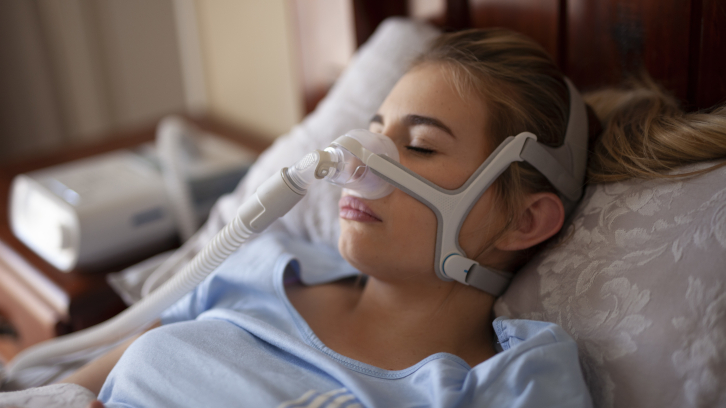
A study by the Guttmann Neurorehabilitation Hospital, associated with the UAB, in collaboration with the Institute for Bioengineering of Catalonia (IBEC), proposes a more accessible, fast, easy to use and cost-effective method to detect sleep apnea after a stroke. This complication is common, but its diagnosis is often limited by the cost and complexity of the available tests. The new proposal is based on a portable system connected to a mobile, which would facilitate the evaluation of a greater number of patients.
Sleep-related breathing disorders, especially sleep apnoea, are the most frequent comorbidity (the coexistence of two or more, often related, diseases) among patients who have suffered a stroke. They are associated with poorer sleep quality, daytime sleepiness, fatigue, and reduced ability to actively participate in rehabilitation programs.
Polysomnography is the gold-standard test for diagnosing sleep apnoea, but its widespread use is limited by its cost, complexity, and the need to transfer patients to a sleep laboratory—something particularly challenging for hospitalized individuals. In this context, portable monitoring systems represent a highly promising alternative.
For this reason, at the Guttmann Hospital for Neurorehabilitation, in collaboration with the Institute for Bioengineering of Catalonia, we developed an innovative project based on a smartphone equipped with integrated sensors for sound, movement, and blood oxygen saturation to study sleep-related breathing disorders. Using this system, we conducted a screening program in all patients admitted for post-stroke rehabilitation over an 18-month period.
Our results showed a high prevalence of previously undiagnosed sleep apnoea (89%) among post-stroke patients, with moderate or severe forms detected in 79% of cases. In addition, sleep apnoea severity, the frequency of respiratory events, and the presence of hypoxemia were associated with greater disability and motor impairment at admission, as well as poorer functional recovery outcomes at discharge. In contrast, sleep quality questionnaires did not suggest relevant disturbances in these patients.
The significance of this study lies in the high proportion of stroke patients with previously undiagnosed sleep apnoea, which may negatively impact neurological recovery. The study also highlights the usefulness of accessible portable devices as an effective screening method for sleep apnoea in this population. This facilitates the early implementation of specific interventions, such as continuous positive airway pressure therapy or positional measures, with the aim of optimizing functional recovery and improving patients’ quality of life.
Guttmann Hospital for Neurorehabilitation
Universitat Autònoma de Barcelona
References
Albu, S., Castillo-Escario, Y., Romero Marquez, A., López Andurell, M., Jané, R., & Kumru, H. (2026). Early screening of sleep-disordered breathing using a smartphone-based portable system in stroke patients and its relevance for rehabilitation: A prospective observational study. Sensors, 26(3), 794. https://doi.org/10.3390/s26030794.