

Daily life with nanoplastics
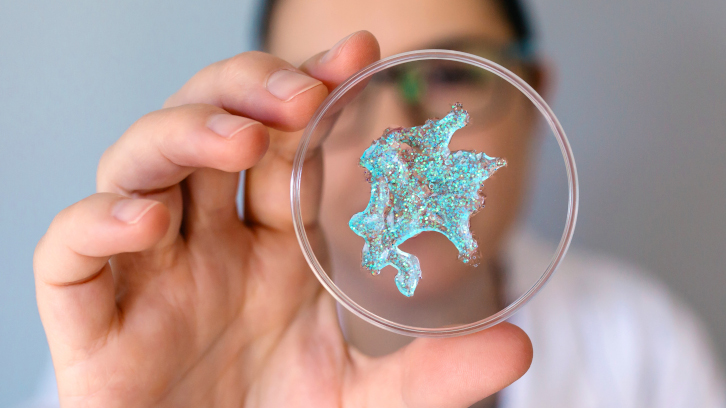
A study conducted by the Mutagenesis Research Group of the Department of Genetics and Microbiology investigates the impact that micro/nanoplastics (MNPLs) may have on the liver of exposed humans, assuming that MNPLs internalization can cause cell alterations that could pose a health risk. The study has noticed that environmentally relevant MNPLs may induce stronger biological responses than the pristine commercial materials commonly used in toxicology studies.
Micro- and nanoplastics (MNPLs) have become increasingly present in our daily life. They have been detected in food, drinking water, and even human tissues such as lungs and placenta, raising new questions about their potential health effects. The Mutagenesis team has focused on the liver, a key organ in detoxification, to gain a better understanding of how different MNPLs interact with human hepatic cells. For this, a model of human hepatic cells (HuH-7) was used.
Five types of nanoplastics were examined: three commercial polystyrene nanoparticles of different sizes (one pristine and two carboxylated) and two “real-life” particles obtained from the fragmentation of PET water bottles and PLA pellets, as common plastic items. These realistic MNPLs better represent what is actually found in the environment, as they are more heterogeneous (in size and shape), and as originated from real plastic degradation, they contain plastic additives.
Firstly, the characteristics of each of the particles were evaluated, including composition, size, and electric charge. Secondly, how efficiently these particles enter the HuH-7 cells was determined. Internalization varied widely according to particle type: PET nanoplastics and small carboxylated PS particles entered cells quickly, while pristine PS showed much lower uptake. Importantly, our results show that higher internalization of MNPLs does not always translate into greater toxicity.
When assessing cellular impacts, only the realistic PET- and PLA-derived MNPLs, which are more similar to those present in the environment, triggered oxidative stress, a state in which the level of reactive molecules is higher than what the cell can neutralize. It was also observed an increase in cytokine release, proteins that cells use to communicate and alert when there is a danger. In the case of PLA, genotoxicity was also detected, meaning there is a direct DNA damage induction. These processes are early signs of alterations that, if maintained over time, could contribute to inflammatory diseases and other chronic conditions. These effects highlight that environmentally relevant MNPLs may induce stronger biological responses than the pristine commercial MNPLs commonly used in toxicology studies.
As shown in the picture, different MNPLs interact differently with human liver cells. After reaching liver cells, PET and PLA MNPLs show high levels of internalization and trigger biological responses. PET particles induce oxidative stress, an imbalance of oxygen-reactive molecules that challenge cell stability, while PLA particles additionally cause damage to the DNA. Both MNPLs stimulate cytokine release, signaling that the cells perceive these particles as a threat. Together, these findings highlight that environmentally realistic nanoplastics can activate stronger cellular stress responses than the commercial pristine MNPLs commonly used in laboratory studies.
Our findings reinforce the need to evaluate MNPLs’ effects using materials that truly mimic environmental exposure. Such evidence is essential to improve correct risk assessment and to advance toward better-informed plastic management policies.
References
Morataya-Reyes, M., Villacorta, A., Arribas Arranz, J., Martín-Pérez, J., Ferrer, J. F., Pastor, S., Egea, R., Barguilla, I., Marcos, R., & Hernández, A. (2025). Exploring the impact of nanoplastics on human hepatic cells: dynamics of internalization and harmful effects in HuH-7 cells. Environmental Science: Nano, 12(11), 4920-4934. https://doi.org/10.1039/d5en00434a.